

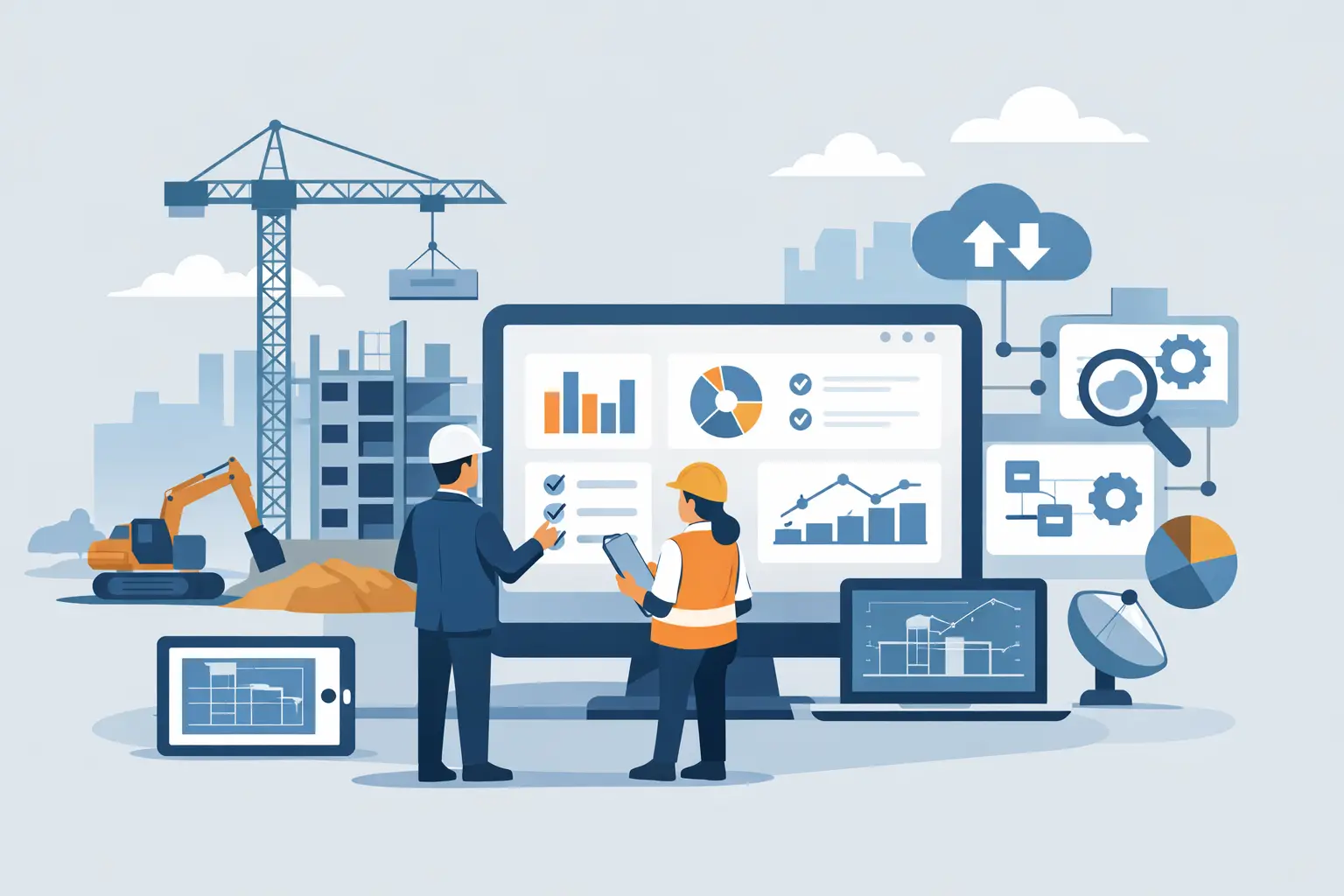
Paper failures rarely happen in the office. They happen at the workface – during an inspection, before a hold point is released, or when someone needs the latest approved record and cannot confirm which copy is current. That is where DWSS for construction projects becomes a practical control measure rather than just another software category. For contractors, consultants, and project owners managing compliance-sensitive work, a Digital Works Supervision System gives structure to inspections, approvals, records, and follow-up actions where timing and traceability matter most.
The value is not simply that forms become digital. The real improvement is that supervision activities can be carried out within a controlled process, with clear responsibilities, audit trails, and standardized records. On large civil, infrastructure, and public works projects, that difference directly affects quality assurance, reporting confidence, and readiness for internal or external review.
What DWSS for construction projects is actually solving
Construction teams already manage inspections, method statements, checklists, nonconformance records, and site instructions. The problem is that these activities are often fragmented across paper forms, email chains, spreadsheets, messaging apps, and shared drives. Information exists, but not in a form that is easy to validate, retrieve, or defend.
A properly implemented DWSS for construction projects addresses that gap by bringing site supervision records into a governed digital environment. Inspection requests can be initiated from the field. Supervisors can review, comment, approve, reject, or record observations against a structured workflow. Supporting evidence such as photos, marked-up drawings, and related documents can be attached to the same record. Each action is time-stamped, attributable, and easier to track across the life of the project.
That matters for two reasons. First, site teams need speed. Second, project stakeholders need evidence. A system that improves one but weakens the other is not good enough. The right DWSS supports both operational execution and compliance accountability.
Why paper-to-PDF is not the same as digital supervision
Many organizations think they have digitized supervision because forms are scanned or completed as static PDFs. In practice, that usually preserves the same weaknesses in a new format. People still rekey data. Versions still get mixed up. Approval status still depends on inbox visibility. Reports still take manual effort to compile.
Digital supervision starts when the process itself is structured inside the system. That means predefined workflows, controlled templates, user roles, review paths, status tracking, and searchable records. It also means records are created with context – linked to location, package, discipline, contractor, or asset classification – instead of sitting as isolated files in a folder tree.
This is where many deployments succeed or fail. If the system is treated as simple form replacement, users see limited benefit. If it is configured around actual supervision workflows, adoption is stronger because the platform reduces friction rather than adding another administrative step.
Core functions that matter on live projects
The most useful DWSS platforms are built around how supervision is performed in the field and how records are reviewed at management level. Inspection workflow is central, but it is only one part of the picture.
Teams typically need configurable electronic forms for inspections, check requests, site observations, and quality verification. They also need approval routing that reflects real project authority lines, not a generic office workflow. Mobile access is equally important because supervision activities are time-sensitive and site-based. If users must return to a desktop to complete basic actions, the process slows down and people fall back to manual workarounds.
Document control integration is another critical requirement. Inspection records often need to reference current drawings, specifications, method statements, and approved submissions. Without that connection, supervision records can become detached from the controlled project document set. For complex capital works, that creates avoidable risk.
Reporting and dashboard visibility also matter, but they should be practical. Project teams need to know what is pending, overdue, rejected, or closed. Management needs a clear view of performance trends, bottlenecks, and outstanding actions. Good reporting supports intervention. It should not require a separate analyst to make the data useful.
Compliance is a system design issue, not just a user issue
When supervision records are incomplete or inconsistent, the usual reaction is to blame users. Sometimes that is fair. More often, the underlying issue is poor process design. If a system allows missing fields, unclear responsibilities, untracked revisions, or uncontrolled attachments, compliance gaps are predictable.
A DWSS should enforce the level of control the project requires. Mandatory data fields, workflow checkpoints, approval authority, revision history, and complete record retention are not optional extras on regulated or contract-heavy projects. They are part of the operating model.
This is particularly relevant for projects where contractual obligations, internal QA/QC procedures, and public accountability standards all overlap. In those environments, supervision records are not just operational notes. They can become evidence during audit, dispute review, handover verification, or maintenance transition. A dependable digital record is therefore a project asset, not just an administrative output.
Implementation is where the real return is won or lost
Buying software is the easy part. Getting a DWSS to work properly across live construction operations is harder. The strongest outcomes usually come from implementation that starts with actual workflows, approval structures, document types, and reporting needs rather than from a standard out-of-the-box setup.
That means mapping how inspections are requested, who reviews them, what supporting documents are needed, how exceptions are handled, and which records must flow into the wider document management environment. It also means agreeing on naming conventions, metadata, security roles, and retention requirements early. Without that discipline, digital records become inconsistent very quickly.
Training is just as important as configuration. Site supervisors, engineers, QA/QC staff, document controllers, and managers use the system differently. They need role-specific training based on daily tasks, not generic software demonstrations. When implementation includes in-site support and practical user onboarding, adoption is usually faster and resistance is lower.
This is one reason specialist providers stand apart from general workflow vendors. They understand that a works supervision process cannot be configured in abstract terms. It must reflect site realities, project controls, and compliance obligations. A platform such as InnoShare DWSS 2.0 is most effective when delivered with that implementation mindset.
Where DWSS fits with BIM and EDMS
For many organizations, the question is not whether to digitize supervision, but how DWSS should sit alongside existing enterprise systems. That is the right question. A supervision platform should not become another isolated application that creates duplicate records and parallel filing structures.
Integration with an EDMS helps ensure that final records, supporting documents, and controlled revisions are managed within a broader information governance framework. This is especially important on large infrastructure programs where records must be retained, retrieved, and handed over in a disciplined way. If DWSS activity produces records that are difficult to align with enterprise document control, the long-term benefits are reduced.
BIM alignment can also add value, although the use case depends on project maturity. On some projects, linking supervision records to model elements or asset locations improves traceability and coordination. On others, the simpler priority is making sure field records are complete, approved, and easy to find. Not every project needs the same level of system integration on day one. The right approach depends on project scale, digital readiness, and contractual requirements.
What buyers should evaluate before selecting a system
A DWSS decision should be based on fit for supervision operations, not just software features. Field usability matters. Workflow configurability matters. Audit trail strength matters. Vendor support matters. Just as important, buyers should assess whether the provider understands construction documentation and can support planning, customization, installation, training, and ongoing maintenance.
There is always a trade-off between flexibility and control. A highly flexible platform may support many use cases but require more governance to keep records standardized. A more structured system may drive better consistency but need careful configuration to reflect project-specific procedures. Neither approach is automatically better. The right choice depends on how standardized your organization is and how much implementation discipline you can sustain.
It is also worth asking how the system will perform under project pressure. Can site teams use it quickly? Can managers trust the approval history? Can document controllers retrieve records without manual cleanup? Can the organization support multiple contracts without reinventing the setup each time? Those are operational questions, and they usually matter more than attractive interface claims.
The strongest DWSS deployments are the ones that make supervision easier to execute and easier to prove. That combination supports quality, compliance, and project confidence at the same time. If your project environment is still relying on disconnected forms and after-the-fact record assembly, the next improvement is not more paperwork discipline. It is a better supervision system, implemented with the realities of construction in mind.
Comments are closed.